On-Device AI Privacy: How Your Smartphone Processes Data Without Sending It to the Cloud (2026 Guide)
On-device AI privacy is becoming one of the most important features in modern smartphones. In 2026, users are more concerned than ever about how their data is collected, stored, and processed.
Many people assume that all artificial intelligence features rely on cloud servers. However, modern smartphones now process much of your personal data directly on the device itself. If you’re curious how AI works silently in the background, read our detailed guide on the smartphone AI system.
This shift toward on-device AI privacy improves security, reduces data exposure, and increases user trust.
What Is On-Device AI?
On-device AI refers to artificial intelligence models that run locally on your smartphone instead of sending data to external cloud servers.
Examples include:
- Face recognition
- Voice assistants
- Predictive typing
- Photo enhancements
- Spam call detection
When these processes happen locally, your personal data doesn’t need to travel across the internet. According to official Android AI documentation, many features now run locally on supported devices.
That is the core principle behind on-device AI privacy.
Why Cloud-Based Processing Raised Concerns
In the past, many smart features required cloud processing. That meant:
- Your data was uploaded to remote servers
- Processed externally
- Results were sent back
While encrypted, this method still raised privacy questions.
Users began asking:
- Who can access this data?
- How long is it stored?
- Is it used for training models?
On-device AI privacy reduces these concerns significantly.
How Modern Smartphones Enable On-Device AI Privacy
Modern smartphones include:
- Dedicated AI chips
- Neural processing units (NPUs)
- Advanced processors
These components allow real-time processing without internet dependency.
For example:
- Face unlock happens instantly without cloud verification
- Voice typing converts speech locally
- Photo background blur happens directly inside the device
All of this strengthens on-device AI privacy.
Real-World Features Powered by On-Device AI
1️⃣ Smart Reply Suggestions
Your phone suggests replies based on conversation context. These suggestions are generated locally.
2️⃣ Live Photo Editing
Portrait lighting and background separation use device-level processing.
3️⃣ Keyboard Learning
Your typing habits are learned directly on your device — not uploaded continuously.
4️⃣ Voice Recognition
Wake-word detection (like “Hey…”) is processed offline first.
Each of these examples shows how on-device AI privacy is integrated into daily use.
Benefits of On-Device AI Privacy
1. Improved Security
Data remains on your device, reducing exposure risk.
2. Faster Performance
Local processing is quicker than cloud communication.
3. Offline Functionality
Many AI features now work without internet.
4. Reduced Data Collection
Less information needs to be stored externally.
These advantages explain why on-device AI privacy is becoming the standard in 2026.
Apple also highlights on-device machine learning in its official documentation.
Does On-Device AI Mean Complete Privacy?
Not entirely.
Some features still rely on cloud support, such as:
- Large language model queries
- Cloud backup
- Cross-device syncing
However, sensitive data like biometric recognition and personal typing behavior is increasingly handled locally.
Understanding this balance is important when evaluating on-device AI privacy claims.
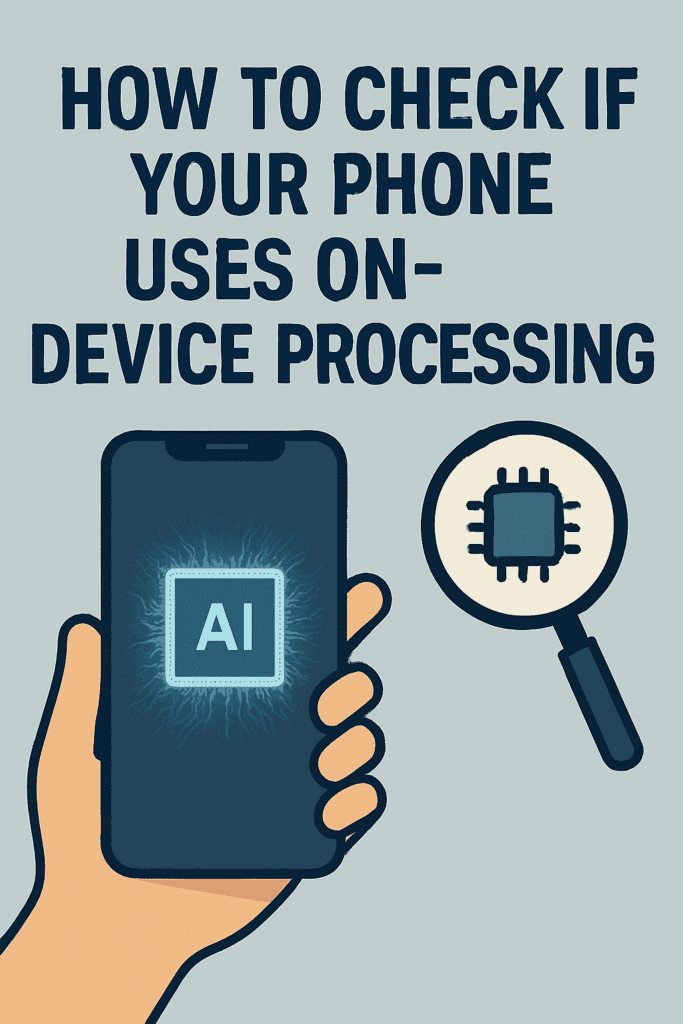
How to Check If Your Phone Uses On-Device Processing
You can:

- Look for “processed on device” notes
- Read official documentation
Many manufacturers now highlight on-device AI privacy as a key selling point.
Future of On-Device AI Privacy
By 2026 and beyond:
- AI chips will become more powerful
- More features will shift offline
- Privacy marketing will increase
- Regulatory standards may tighten
The industry is clearly moving toward minimizing cloud dependency for personal data.
On-device AI privacy will likely become a baseline expectation rather than a premium feature. You can also improve device control using our complete smartphone digital wellbeing guide.
Common Misconceptions
❌ “All AI sends data to servers”
❌ “Offline AI is less powerful”
❌ “Local processing is slower”
Modern hardware proves otherwise.
Final Thoughts
On-device AI privacy represents a major evolution in how smartphones handle personal data.
Instead of relying entirely on remote servers, modern devices are becoming smarter independently. This shift improves speed, security, and user confidence.
As technology advances, users who understand on-device AI privacy will make more informed purchasing decisions.
In 2026, privacy is no longer just about permissions — it’s about where your data is processed.
And increasingly, it’s happening right in your pocket.
Frequently Asked Questions
1. What is on-device AI privacy?
It refers to artificial intelligence features that process data directly on your smartphone without sending it to cloud servers.
2. Is on-device AI safer?
Yes, because sensitive information remains on your device, reducing exposure risks.
3. Does on-device AI work without internet?
Many features do, especially biometric recognition and typing prediction.
4. Do all smartphones support on-device AI?
Most modern smartphones include some level of local AI processing.